It is not in the Lok Sabha, where the BJP has a clear majority, but the Rajya Sabha that the Opposition has ganged up to checkmate Prime Minister Narendra Modi's ambitious plans.

anata Dal-United president Sharad Yadav says leaders of all 11 parties who've formed a new front will meet after the current Parliament session to finalise a name, coordination strategy and programmes. Mayank Mishra reports

The ruling AIADMK is leaving no stone unturned to win the Vellore Lok Sabha poll and push its tally to two in the state, with its candidate even donning the skull cap to woo minority votes. But the DMK's stars are clearly on the ascendant in the lone constituency that goes to the polls on August 5. A Ganesh Nadar reports.
It does not stop here, though. According to field information, state ministers, AIADMK candidates and campaigners are asking BJP cadres accompanying them not to carry party flags at common rallies and also avoid their saffron shawl on those occasions. BJP cadres are also asked to stay out of the common campaign when it enters a minority-dominated areas, especially of Muslims, and re-join later, says N Sathiya Moorthy.

'The BJP doesn't have to do anything except nudge the AIADMK in one direction.'
On the face of it, the first round has gone to Edappadi K Palaniswami. Not only has he been named chief ministerial candidate, that too by his one-time bete noire Panneerselvam, he also gets one member more in the steering committee than OPS. He can now hope to wean away one or more members of the OPS team in the steering committee just as he had done with other leaders in the latter's camp, post-reunification. That was also OPS's concern, says N Sathiya Moorthy.
Tamil Nadu's politics returns to being bi-polar, and that's a good thing, says B Srikumar.
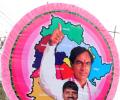
With almost 300 seats to the Lok Sabha being dominated by regional outfits, the Congress has added to the list by giving space to more regional forces in the Seema-Andhra and Telangana regions, says Saroj Nagi.

There are indications that India may be shedding its Stockholm Syndrome vis-a-vis the Modi government, says Bharat Bhushan.
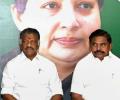
DMK leader MK Stalin is concerned that a no-trust move would force the EPS faction to patch up with not only the OPS group but also the TTV camp and also get the 'Two Leaves' poll symbol unfrozen, which could upset his party's electoral apple cart, says N Sathiya Moorthy.

The Payment of Gratuity (Amendment) Bill and The Specific Relief (Amendment) Bill passed amid din.

In Rajya Sabha, the Opposition and the government clashed over technicalities of the passage of an anti-graft amendment bill with the latter insisting that it should be adopted without debate.

The imapsse continues over issues like bank scams and special status demand for Andhra Pradesh.

Droupadi Murmu scripted history on Thursday by becoming India's first tribal President in the one-sided contest, defeating Opposition candidate Yashwant Sinha.
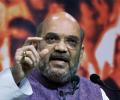
Presenting a report card of two years of the Modi government, BJP chief Amit Shah credited the party for giving a "decisive" government.

Jayalalithaa's attack on BJP's PM hopeful a little too late in the coming, says N Sathiya Moorthy

Panneerselvam also remained firm on his faction's demand for a probe into late J Jayalalithaa's death.
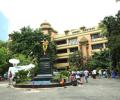
Ageing leadership, reckless family-oriented politics, absence of inner-party democracy, lack of debate on core issues within the party are all taking a very heavy toll on the original Dravidian party, says R Ramasubramanian.

It is a sea of men clad in veshtis with distinctive party colour border design seeking votes with a smile and folded hands for their party candidates. The town is abuzz, with electioneering at its peak, and teeming trendy cars criss-cross the busy roads and bylanes bringing in more and more leaders from elsewhere for campaign.

A G Perarivalan alias Arivu is now a free man following a legal battle, and that long fight provides scope for throwback moments of Tamil sentiment that propelled the struggle which was backed by most political parties and successive governments in Tamil Nadu.
Strategy or confusion? The Tamil Nadu BJP has many reasons to feel let down by Prime Minister Modi's whistlestop tour to the state on Tuesday, says R Ramasubramanian.
Post-Jayalalithaa AIADMK cannot take on the Narendra Modi dispensation like their late charismatic leader did it on several occasions in the past, says R Ramasubramanian.

AIADMK coordinator O Panneerselvam is said to be upset at his son Raveendranath Kumar, a Lok Sabha MP, being denied a ministerial chance for a second time in a row, beginning with the formation of Modi 2.0 in 2019, reveals N Sathiya Moorthy.

'AAP's real value must be measured not by the number of Lok Sabha seats it wins in the election -- which may not exceed 10 or 15 -- and not even by the number of votes it takes from the BJP, but by its ability to deflate Modi's superhuman '56-inch chest' image and the charisma so assiduously manufactured around him by the corporate-controlled media.'

Good intentions and elaborate roadmaps apart, there is an urgent need for the Tamil Nadu chief minister to come up with branded schemes like MGR's meal scheme, asserts N Sathiya Moorthy.

Will the 2016 assembly election be Stalin's to lead the DMK in?

For now, the BJP's strategy for Khushbu seems to be one of denial -- denying the rival Congress in the state and also at the national-level a Muslim voice acceptable to Hindu audiences and TV news-watchers. This is much less than the induction of DMK veterans like Duraiswamy and Selvam, who still have a greater chances of winning assembly seats,, says N Sathiya Moorthy.

"The provisions of the said bill are nothing short of draconian and promote gross incompetence and mockery of professionals currently working day and night and sacrificing their youth for this broken system," said the protesting doctors.
Despite the BJP's displeasure over Sasikala's elevation as AIADMK general secretary, the Dravidian party has sent a message to the Modi government that it will not be cowed down, says N Sathiya Moorthy.
Fulfilling the promises made in the manifesto, a resurgent Opposition in the state assembly, impending local body polls... Tamil Nadu Chief Minister Jayalalithaa may have made history by winning two assembly elections in a row, but the real test begins now, says N Sathiyamoorthy.

Biju Janata Dal members had staged a walk-out while NDA ally Shiv Sena did not participate in the voting.

Here's everything you need to know about the Goods and Services Tax Bill.
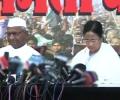
Kisan Baburao Hazare is supporting Mamata Banerjee's Trinamool Congress and attempts are afoot to form an alternative Third Front. Will these alliances really work, asks Bharat Bhushan.
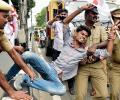
The BJP calculates that simultaneous polls to Parliament and TN assembly could help it, intent as it is on making the state break from its Dravidian past, says N Sathiya Moorthy.
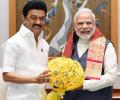
The AIADMK is convinced that the BJP will remain an electoral burden for a long time to come, beginning the Lok Sabha polls next year, reveals N Sathiya Moorthy.
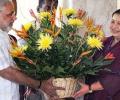
It appears that Prime Minister Narendra Modi is being very responsive to Jayalalithaa's demands, be it on the secure release of the abducted Tamil Nadu priest to the fishermen's issue with Sri Lanka, observes N Sathiya Moorthy.
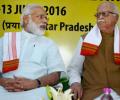
Delivering his concluding address to the party's National Executive, which saw its president Amit Shah raising concerns over "migration" of Hindus from a communally-sensitive western Uttar Pradesh town, Modi made no reference to the controversial issues and instead asked leaders to use power for the benefit of society.

The AAP has adopted policies in an ad hoc manner, without thinking them through or deriving them from a broader framework. This must change if the AAP is to become a credible alternative, says Praful Bidwai.
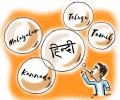
'Nobody is telling you not to speak or learn your mother tongue. But making other languages an emotional issue is wrong.'
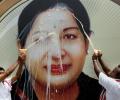
'The AIADMK has no Number Two, frankly it does not even have a Number Hundred and Two. There is the Numero Uno, and there is everybody else -- a point that was made very clear when Jayalalithaa made her ministers take the oath of office in unison on May 23. What, after all, was the point of having them do so individually when they lack individuality?'
 © 2026 Rediff.com - Advertise with us - Disclaimer - Privacy Policy - Sitemap - Feedback - About us - Terms of use - Grievances